
Research conducted by Future Guernsey suggests a worrying trend among local women disengaging from the island’s political system. The study, conducted in the summer of 2024, asked islanders whether they intend to register to vote in the 2025 election, and how likely they are to actually go to the polls.
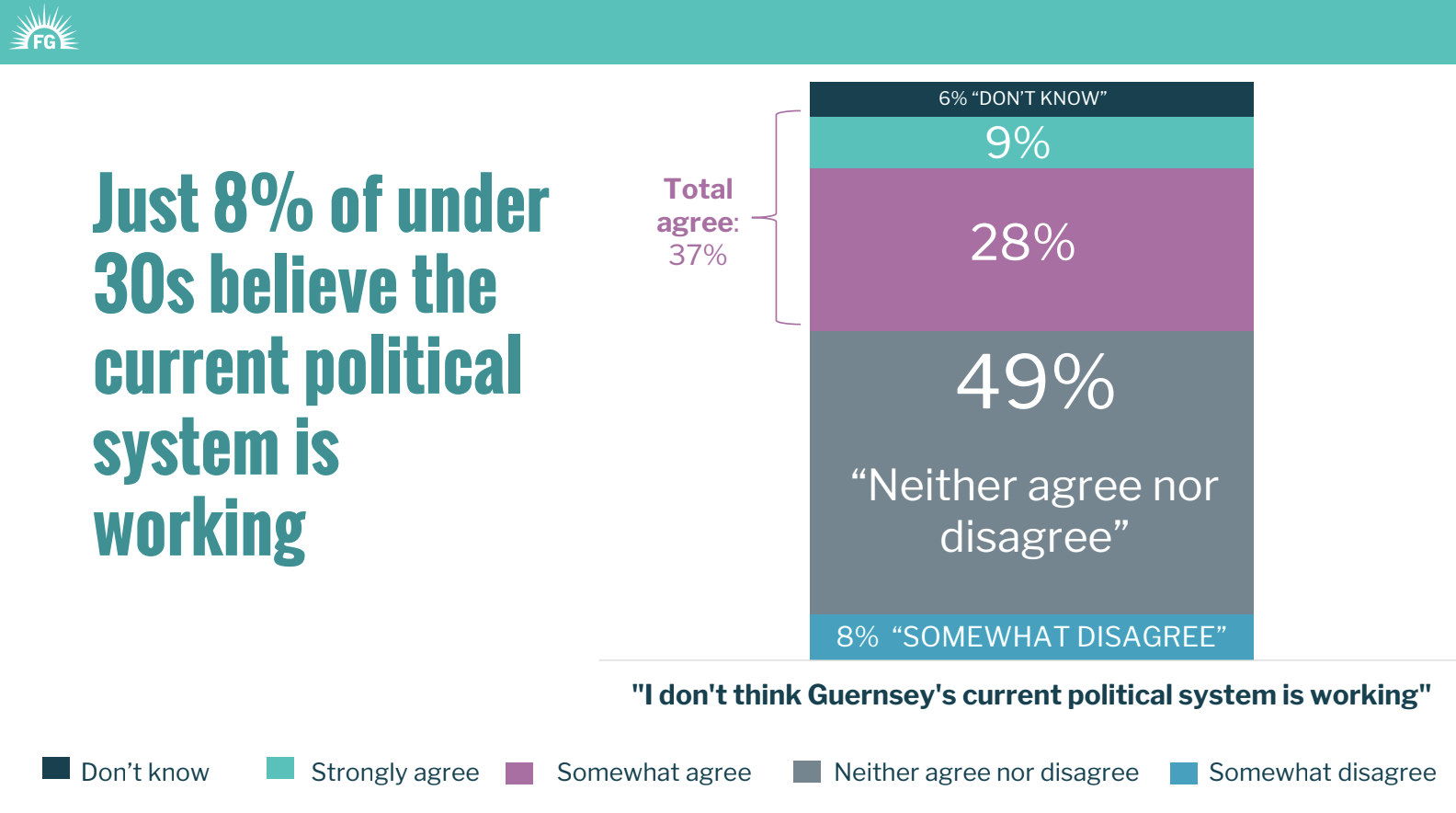
Less than one in ten (8%) islanders aged between 16 and 29 think Guernsey’s political system is working and nearly 40% of under 30s think our political system is failing.
The research, conducted by the political movement Future Guernsey, shows that just shy of half (49%) of under 30s could not offer an opinion on Guernsey’s political system, saying they neither agreed nor disagreed with the question, “I don’t think Guernsey’s
political system is working.” 5% claimed they “didn’t know” if it was working or not. Putting the figures together builds a concerning picture, with 92% of under 30s either thinking that the island’s political system is failing, or claiming to have no opinion on the topic.
Lack of confidence in Guernsey’s political system remains in under 45s
The trend towards apathy continues in under 45s, half (50%) of whom state they don’t think Guernsey’s political system is working and 47% claiming they don’t have an opinion on the topic. That leaves just 3% of 30-44 year olds who believe the current system of government is working, an even lower number than that clocked up in the under 30s.
Young people twice as likely to be concerned about growing prosperity gap
Elsewhere, the research asked islanders aged under 30 to rate their top priority issues, revealing that this age group is twice as likely to have concerns about the growing gap between rich and poor, when compared with their older counterparts. 36% of under 30s have concerns about what they perceive to be the growing prosperity gap, placing the issue third on the list of young voter priorities. That compares with just 18% overall, when all age groups are factored into the figures.
Young people prioritise education, ‘brain drain’ and on-island transport
In common with over 30s, those aged 16-29 cite their top two concerns about Guernsey being housing and the cost of living. However, on close inspection, clear differences in priorities become evident. Perhaps unsurprisingly, education scores higher among young people, who name it their fourth most important priority, compared to fifth overall. This is followed by the issue of so called ‘brain drain’ - namely, islanders leaving Guernsey and not returning - which again appears higher on the priority list for young people. Finally, transport on the island is young people’s sixth priority, named as a concern for 26% of islanders aged 29 and under, compared to a fairly low billing of 16% and eighth place across all age ranges.
Future Guernsey considering a ‘welcome home’ policy to specifically address brain drain
Future Guernsey Political Adviser, Gavin St Pier, says Future Guernsey’s policy suite is currently being crafted and it will ensure it meets the needs of young islanders, “One thing we are seriously considering is a ‘welcome home’ package for islanders who have left Guernsey, often to gain qualifications and/or experience, and who subsequently feel that their route to coming home has been closed off due to the high cost of living and the housing shortage.
“Relocation packages are often available to those who come to the island from other parts of the world to take up key posts, but they are not available to local skilled returnees. We think this a “penny wise, pound foolish” policy. It’s an area where we believe we could level the playing field for islanders and begin to stem the tide of ‘brain drain’.
“Of course, Guernsey will often need workers from the UK and overseas to staff key services and industries, and islanders are grateful for the contribution they make. However, we have young islanders with key skills reporting that they are being priced out of coming home at a time when we have a declining birth rate, an ageing population and therefore a lower tax base. We need to increase the number of people in our population in work, particularly those in their 20s and 30s. Why not do so by levelling the playing field on relocation packages and potentially attracting more local, young, skilled people home to keep our key industries running? This policy would not only reunite families, but also help towards securing a sustainable future for the island.”
Future Guernsey Chief Executive, Lindsey Freeman says,
“The fact that half of islanders aged 16-29 don’t know what their opinions are about Guernsey’s political system is something that we should all be concerned about. Our young people are a huge asset to the island, but it’s clear they’re experiencing difficulties when attempting to engage with local politics in Guernsey. Furthermore, there’s a lack of policy that engages with and addresses the needs of younger people. We hope to change that by building effective policies, drafted by local experts that don’t just appeal to young voters, they make fiscal sense for the whole community.”
Islanders urged to register to vote by 30th April 2025
The States of Guernsey’s election team is currently conducting a campaign to ensure that people register on the Electoral Roll by 30th April, to allow them to cast their votes in the island’s general election in June 2025. Islanders can register at www.election2025.gg.